
Dona: Digital intermediation models to domestic work
An immersive deep dive into the world of home cleaning services, driven by a singular goal: to revolutionize how users connect with reliable cleaning professionals.


Recife
2021
Digital Intermediation Models
Challenge
Despite a high demand for domestic cleaning services, homeowners face considerable difficulty in identifying and hiring reliable, skilled, and trustworthy individuals. This involves extensive personal outreach, vetting multiple candidates, and enduring significant delays, resulting in dissatisfaction with the eventual hire.
Results
A centralized, efficient platform for vetting and connecting with domestic workers.
User-friendly navigation flows to search, filter and payment status that reduced significantly the stressful organic research of domestic workers.
Transparent metadata profiles that help users avaliate and choose the perfect match for their needs.
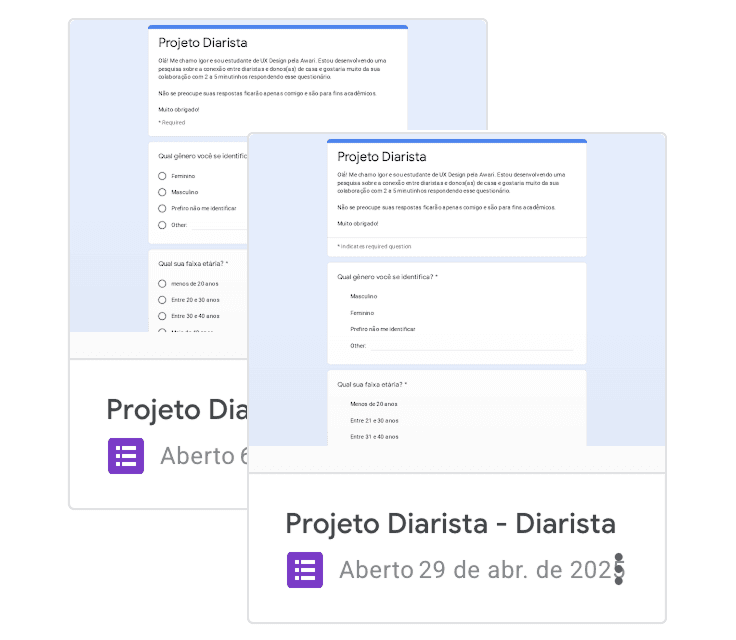
49
Quantitative user responses
4
Qualitative user interview

Process
Research & Analysis:
I conducted user interviews and surveys, gathering qualitative and quantitative data to pinpoint the pain and needs of both service seekers and providers while a comprehensive competitive analysis and prevailing industry trends offered insights into market gaps and opportunities.

Information Architecture:
The research findings informed every decision, allowing to prioritize features and content, ensuring that the most critical functions and information were immediately accessible and intuitively organized according to user needs. The goal was to create a seamless flow, guiding users effortlessly through the process of searching for and booking cleaning services.

Wireframing & Prototyping:
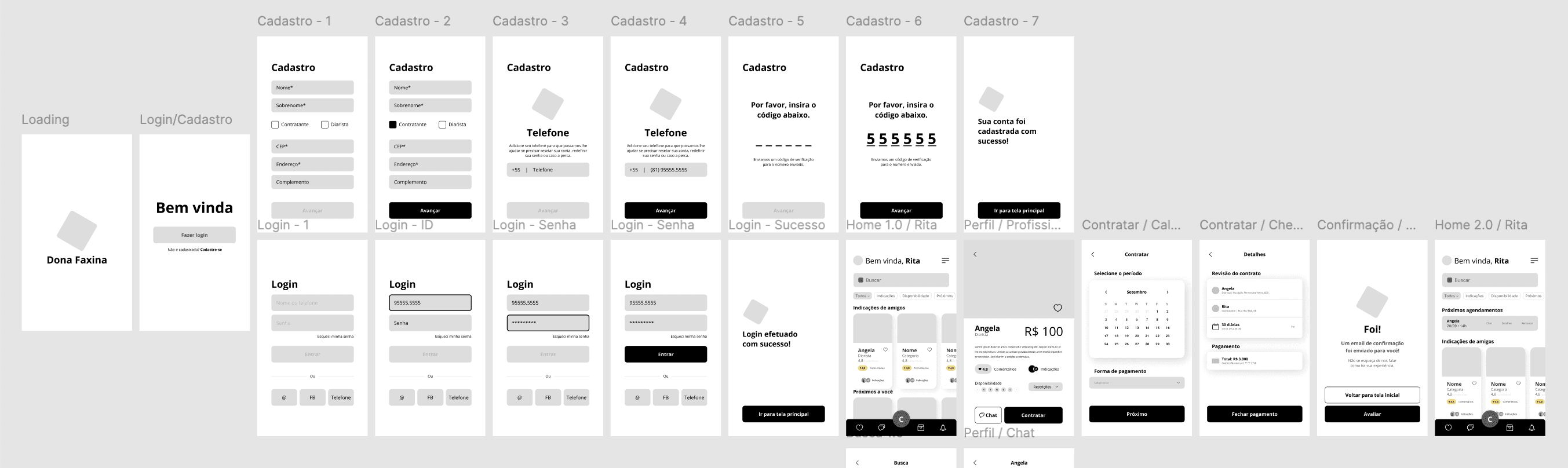
I began with low-fidelity wireframes, translating our structured information architecture into visual layouts. This iterative process involved constant refinement based on early internal feedback. Subsequently, we elevated these designs into a high-fidelity, interactive prototype using Figma. This step allowed me to simulate the actual user experience and rigorously test our design hypotheses in a realistic environment.
Visual Design & Style Guide:
After the hole process I tried to harmonize the project context with a cohesive engaging visual language, creating a color scheme, selecting an appropriate typography, and a icon library that better fits the rest of the designs. All was planed to ensure consistency and a good aesthetic throughout the app. I also compiled a comprehensive design system, a living document that captures the essence of the Dona.

Conclusion
The Dona app, conceived in 2021, successfully addresses the significant challenges homeowners face when seeking reliable domestic cleaning services. By providing a centralized, efficient platform, Dona transforms a previously time-consuming and often frustrating process into a streamlined experience.
More details here: